
Jaw Pain, Clicking or Tension? A Guide to TMJ Dysfunction (TMJD)
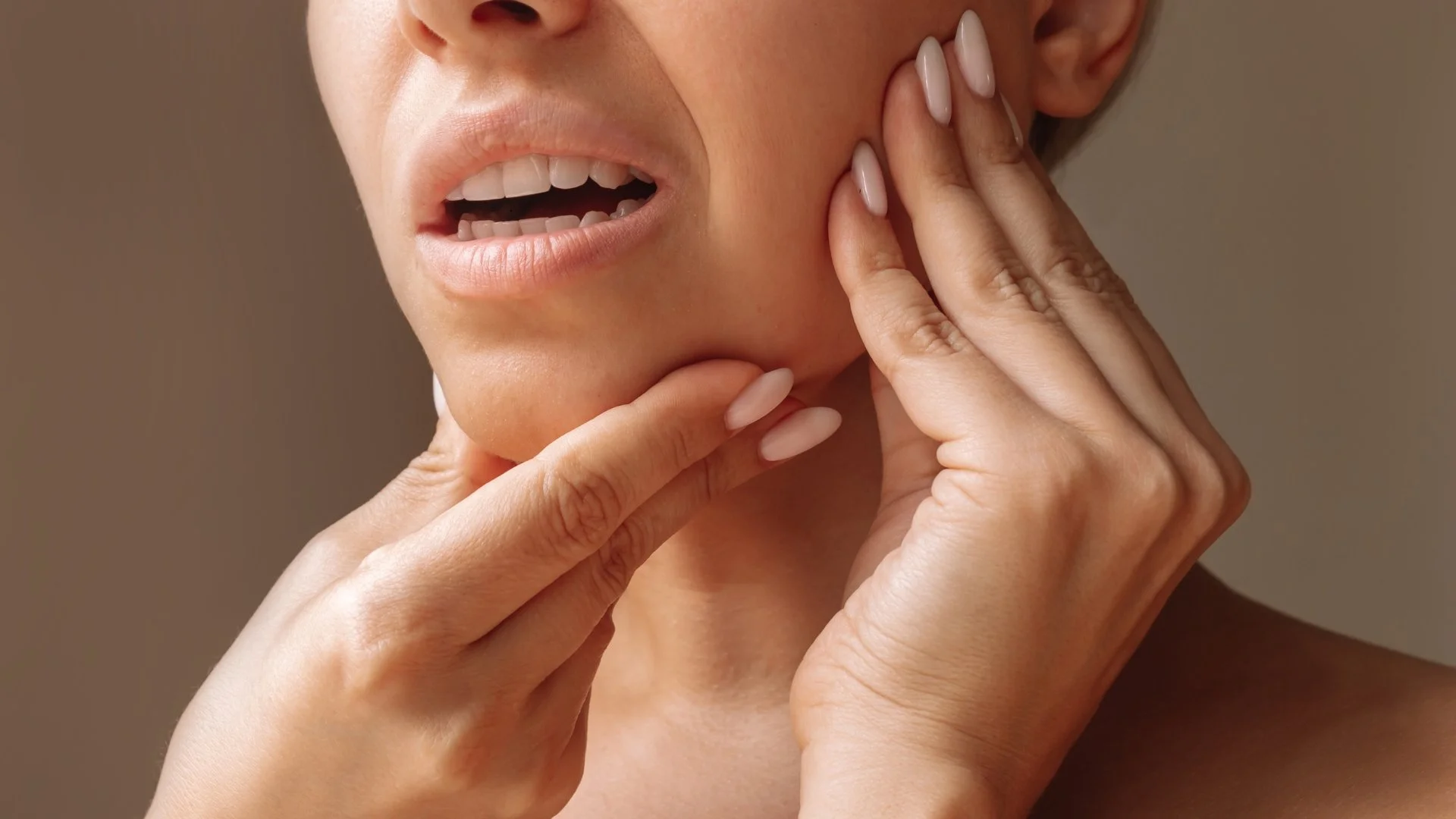
Jaw pain, clicking, clenching and tension are common symptoms associated with temporomandibular joint dysfunction (TMJD).
Jaw Pain, Clicking or Tension? A Guide to TMJ Dysfunction (TMJD)
If your jaw clicks when you eat, feels tight when you wake up, or aches after a stressful day, you're not alone.
Jaw pain can show up in many different ways. For some people, it's a dull ache around the jaw or temples. For others, it's clicking or popping, difficulty opening the mouth comfortably, tension through the face, or discomfort that seems to extend into the neck and shoulders.
These symptoms are often associated with the temporomandibular joint (TMJ) and the muscles that help control the jaw.
At Align Posture + Health in Toronto, we often see people who initially think of their symptoms as simply “jaw tension,” only to realize how closely the jaw, surrounding muscles, neck and everyday habits can interact.
So what exactly is TMJ dysfunction—and what can you do about it?
First: What Is the TMJ?
You actually have two temporomandibular joints—one on each side of your face, just in front of your ears.
These joints connect your lower jaw to your skull and are involved every time you talk, chew, yawn or open and close your mouth.
The term TMJ refers to the joint itself. TMD or TMJD (temporomandibular disorder/dysfunction) refers more broadly to conditions affecting the jaw joint, the muscles involved in jaw movement, and related structures.
In everyday conversation, however, many people simply call the entire problem “TMJ.”
What Does TMJ Dysfunction Feel Like?
TMJ-related symptoms can vary considerably from person to person.
Common symptoms may include:
Jaw pain or aching
Tightness through the jaw or face
Clicking, popping or grinding sounds
Difficulty or discomfort when opening the mouth
Pain while chewing
Jaw stiffness, particularly in the morning
Tenderness around the temples or cheeks
Headaches associated with jaw tension
Ear-area discomfort without an obvious ear problem
Neck and shoulder tension
A feeling that the jaw isn't moving smoothly
And importantly, a clicking jaw doesn't automatically mean something is seriously wrong. Some people have painless jaw sounds without significant dysfunction.
It's when clicking is accompanied by pain, restricted movement, locking or other persistent symptoms that an assessment becomes particularly worthwhile.
Why Does My Jaw Hurt?
There isn't one single cause of jaw pain.
The temporomandibular joint is influenced by the joint itself, the muscles controlling the jaw, your nervous system, habits and behaviours, and sometimes other areas such as the neck.
Factors that may contribute to jaw pain or aggravate existing symptoms include:
Clenching and grinding
Some people clench their jaw during the day without realizing it. Others grind or clench their teeth while sleeping.
Over time, increased activity in the muscles responsible for closing the jaw can contribute to fatigue, tenderness and tension.
Stress
Have you ever noticed yourself tightening your jaw when you're concentrating or stressed?
Stress doesn't mean jaw pain is “all in your head.” It can influence muscle tension and behaviours such as clenching, which may contribute to symptoms.
Changes in jaw loading
Chewing gum frequently, biting hard foods, nail biting or suddenly placing greater demands on the jaw can sometimes aggravate a sensitive area.
The neck and surrounding muscles
The jaw doesn't function completely independently from the rest of your head and neck.
For some people with jaw pain, neck pain, headaches or muscular tension may also be present. That's one reason a thorough assessment should look beyond the exact spot that hurts.
The joint itself
TMJ symptoms can also involve structures within the joint. Because jaw pain can have different causes, treatment shouldn't automatically be identical for everyone.
What About Posture and TMJ Pain?
As a posture-focused clinic, this is an important distinction for us.
You'll sometimes see claims online that “bad posture causes TMJ.” That's an oversimplification.
The relationship between the jaw, head and neck is more nuanced than that. Posture isn't necessarily the cause of someone's TMJ symptoms, and simply “sitting up straight” isn't a TMJ treatment.
However, the jaw and cervical region function as part of a connected musculoskeletal system. When appropriate, assessing neck mobility, muscle tension, movement patterns and sustained positions can provide useful information alongside examination of the jaw itself.
The goal isn't to blame your posture. It's to understand the whole picture.
How Is TMJ Dysfunction Treated?
Because TMJ symptoms can come from different structures and contributing factors, there isn't one treatment that is right for everyone.
Conservative care may include education, exercises, changes to aggravating habits, manual therapy and other approaches depending on what is found during an assessment.
At Align Posture + Health, our multidisciplinary team allows us to approach jaw pain from several perspectives.
Chiropractic Care for TMJ + Jaw Pain
Chiropractic care for TMJ-related complaints may involve assessing not only jaw movement but also the surrounding muscles and the neck when clinically appropriate.
Treatment can include manual therapy, soft-tissue techniques, mobility work, exercises and advice around habits or movements that may be contributing to symptoms.
The exact approach depends on the individual rather than following the same TMJ protocol for every patient.
Massage Therapy for Jaw Tension
Registered Massage Therapy can be particularly appealing for people whose jaw symptoms include significant muscular tightness or tenderness.
Depending on the therapist's training and the individual's needs, treatment may address muscles around the jaw, face, neck and shoulders.
Massage therapy may be incorporated into a broader care plan or used independently for people seeking help managing muscular tension.
Acupuncture for TMJ + Jaw Pain
Acupuncture is another conservative option that may be considered for people experiencing jaw pain and muscular tension.
Treatment is individualized based on the practitioner, assessment and patient's presentation.
At Align, having acupuncture available alongside chiropractic and massage therapy also means patients have options rather than being directed toward a single type of care.
An Integrated Approach to TMJ + Jaw Pain
Jaw pain doesn't always involve just one structure, which is why an integrated approach can be helpful.
At Align, our chiropractors, registered massage therapists and acupuncturists can work collaboratively, bringing different perspectives and treatment approaches to your care.
Chiropractic care may focus on jaw and neck function, mobility and movement. Massage therapy can address muscular tension through the jaw, face, neck and shoulders. Acupuncture offers another approach for managing pain and muscle tension.
Depending on your individual presentation, your care may involve one discipline or a combination of therapies, with our team able to communicate and collaborate when appropriate.
Rather than treating every person with jaw pain the same way, we aim to build an integrated care plan around you—your symptoms, contributing factors and goals.
What Can I Do at Home for Jaw Tension?
A few simple habits may help reduce unnecessary stress on an irritated jaw:
Notice whether you're clenching during the day.
Give your jaw breaks from frequent gum chewing or particularly hard/chewy foods if these aggravate symptoms.
Avoid repeatedly clicking or “testing” your jaw.
Pay attention to activities or positions that consistently make symptoms worse.
Follow exercises prescribed specifically for you rather than trying every TMJ exercise you find online.
One useful awareness cue is to notice your resting jaw position. Your teeth generally don't need to remain clenched together when you're at rest.
When Should Jaw Pain Be Assessed?
Consider having your jaw assessed if symptoms are persistent, worsening, interfering with eating or normal activities, or if you're experiencing painful clicking, restricted opening or episodes of locking.
And not every type of facial or jaw pain is musculoskeletal. Dental problems, infection and other medical conditions can sometimes cause pain in the same general region. Depending on your symptoms, your chiropractor, massage therapist or acupuncturist may recommend assessment by a dentist, physician or another healthcare professional.
Looking for TMJ or Jaw Pain Care in Toronto?
You don't have to figure out which muscle, joint or treatment you need before booking.
At Align Posture + Health, our multidisciplinary team offers chiropractic care, Registered Massage Therapy and acupuncture for people experiencing jaw pain, jaw tension and related musculoskeletal concerns.
Our clinic is located on College Street in Toronto, and our team can help determine an appropriate approach based on your symptoms, goals and assessment.
Jaw tight? Clicking? Clenching? Let's take a closer look. Book your appointment online.
Align today, thrive tomorrow.
This article is for general educational purposes and is not intended to diagnose or treat a specific condition. Jaw and facial pain can have multiple causes. Consult an appropriate healthcare professional for symptoms that are severe, persistent, unexplained or concerning.
